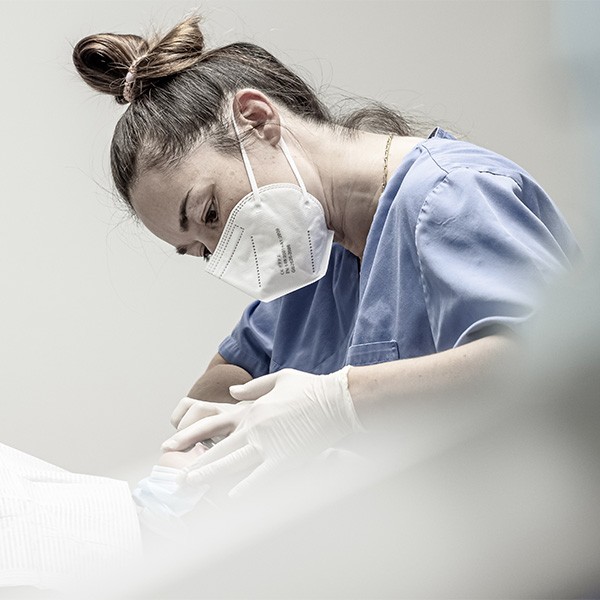
Orthodontics / misaligned teeth
At the dental practice on Fronwagplatz, Ms Brüggemann is a specialist in all treatments related to misaligned teeth. We focus on individual, modern and gentle therapeutic approaches to correcting tooth and jaw alignment – for optimal function and a balanced smile.The focus is on careful diagnosis combined with personal support. During the initial examination, we check whether the teeth are changing in line with age, whether there is sufficient space for the teeth and whether the jaw position and bite function are normal. Based on this, we create a tailor-made treatment plan that is tailored to your situation and functional requirements.
Whether classic braces, transparent aligners or combined orthodontic procedures – we work with you to determine the most suitable method for correcting your teeth alignment.
The following are the most important areas of orthodontics:
Diagnosis of malocclusion
Our orthodontist specialises in accurately diagnosing deviations in tooth and jaw position. These include Class II anomalies (overbite), Class III anomalies (underbite), anomalies of the prognathic type (crossbite), lack of space with crowding (jaw narrowing) and open bites.
Treatment planning
After a comprehensive diagnosis, we create a customised treatment plan to correct the specific malocclusion. This may involve various orthodontic appliances and procedures.
Correction of malocclusions
To treat malocclusions, we mainly use braces (brackets and wires) that are attached to the teeth and move them into the desired position in a controlled manner. Depending on the severity, aligners, removable appliances or, in more complex situations, surgical support may also be considered.
Influencing jaw growth
We make targeted use of bone growth by promoting or slowing it down, as appropriate. Early orthodontic assessment of children is particularly important so that we can determine the ideal time for treatment.
Prevention
To prevent future malocclusions, we carry out preventive measures, known as interceptive treatments. These help to shorten or, in the best case, avoid subsequent orthodontic therapies.
Improving aesthetics
In addition to functional improvements, we also support the aesthetic optimisation of the facial profile. Correcting malocclusions contributes to a more harmonious smile and a balanced appearance.
Health benefits
Our orthodontic treatments can help prevent or alleviate complaints that can arise from malocclusions. These include problems with the jaw joint and limitations in chewing, speaking, swallowing and breathing.
Orthodontics for children and adolescents
Orthodontics for adults
How does treatment work and how long does it take?
If you would like clarification, make an appointment by telephone for an initial examination with Mrs. M.Sc. med. dent. Tine Brüggemann. During the initial examination, the findings are recorded. This involves checking whether the change of teeth and the development of the teeth and jaws is/was age-appropriate, whether the teeth have sufficient space, whether the jaw position looks normal and whether sufficient jaw and bite function is guaranteed.
Preparations for drawing up the treatment planIf treatment is recommended, various follow-up examinations and health documents must be prepared, which are essential for a smooth orthodontic treatment process. These include
- Health questionnaire / medical history
- Impression/moulds of the upper and lower jaw for the production of models
- Special x-rays
- Photos of the face, teeth and jaw position
- Detailed examination of dental health, tooth position and function
Joint preparation of the treatment plan
A detailed and individualised treatment plan can only be drawn up after an exact evaluation of the X-ray images in combination with the other findings about the tooth misalignment. In a consultation (together with the parents in the case of children, of course), all the findings are discussed, the existing deviations/misalignments are explained and possible treatment approaches are outlined. The course of treatment is then roughly outlined and the expected duration and costs of treatment are suggested.
Carrying out the treatment from the insertion of the braces or appliance up to and including the retention phase
Orthodontic treatment sometimes takes several years. The influence on growth and the weak forces must be able to take effect over a longer period of time. In addition, the treatment result achieved must be stabilised during the retention or holding phase.
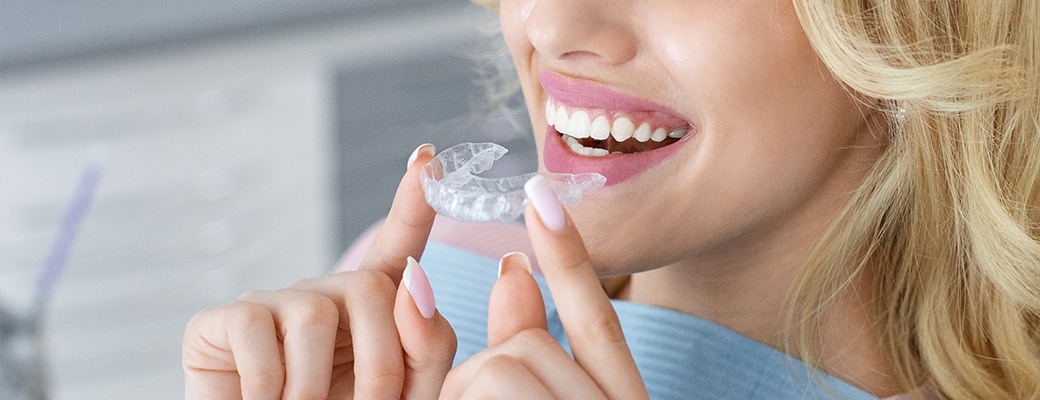
What treatment methods are available? What are the advantages/disadvantages?
The age of the patient plays a key role and is taken into account both in the preparation of the planning documents and throughout the entire treatment process. Regardless of whether a fixed or removable appliance is chosen, active cooperation is crucial.
Thanks to modern materials and optimised treatment techniques, we can carry out orthodontic treatment efficiently, gently and, in many cases, in a shorter time.
Some orthodontic appliances and braces are presented below:
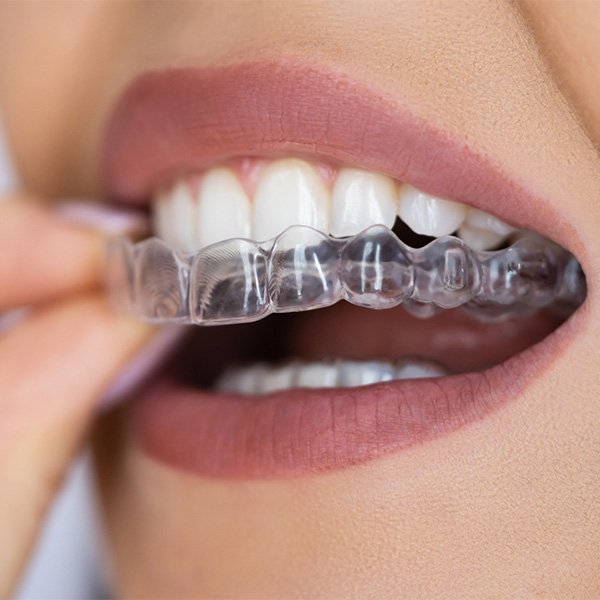
Aligner (removable)
The advantages include their inconspicuous appearance, high wearing comfort, the possibility of removing the splints for eating and drinking, good oral hygiene, less pain and easy handling.
Aligners require consistent wear, as they should be worn for at least 20 hours per day. However, not all misalignments can be treated with aligners, such as pronounced skeletal deviations, severe rotations, significant tilting or vertical misalignments.
Our orthodontist will be happy to advise you on whether aligner therapy is suitable in your case.
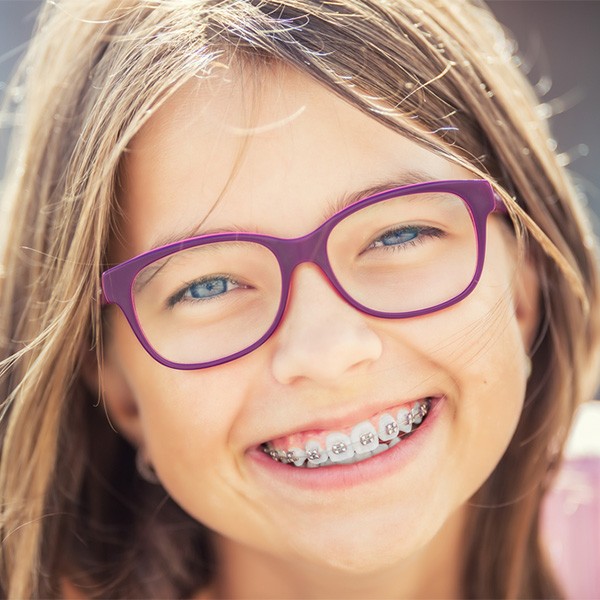
Multibracket appliance (fixed)
In children and adolescents, the brackets are usually bonded to the outer or buccal surfaces of the teeth. As the appliance remains firmly anchored in the mouth for a long period of time, careful handling of the braces is crucial. Thorough oral hygiene, proper care and a suitable diet contribute significantly to the success of the treatment. Fixed braces are very efficient and often the best treatment option for severe jaw misalignments.
For adult patients, we recommend lingual braces, which are invisibly attached to the inner or lingual surfaces of the teeth. The type of bracket system used depends on the individual situation and the respective diagnosis. We would be happy to advise you personally.
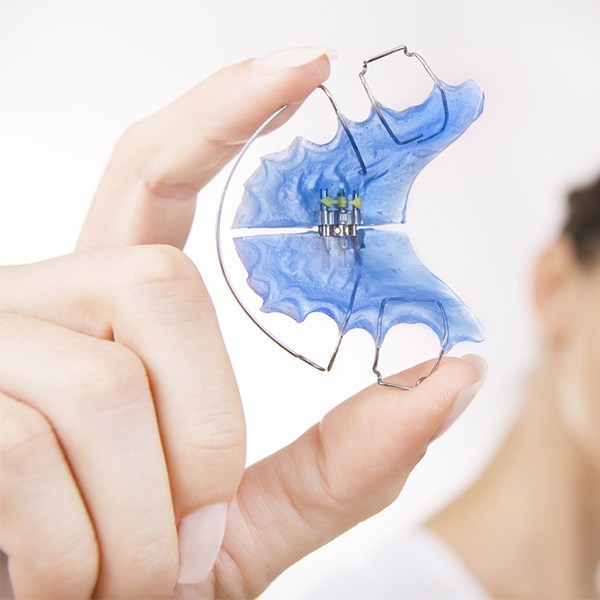
Palatal expansion appliance (PEA)
The upper jaw consists of two bone halves that are connected by the median palatine suture (Sutura palatina mediana). In children and adolescents, this suture is not yet fully ossified and can be stretched by applying gentle, controlled pressure. This is done by turning a screw located centrally in the palate area.
In adults, GNE can be used in combination with a supportive surgical procedure.
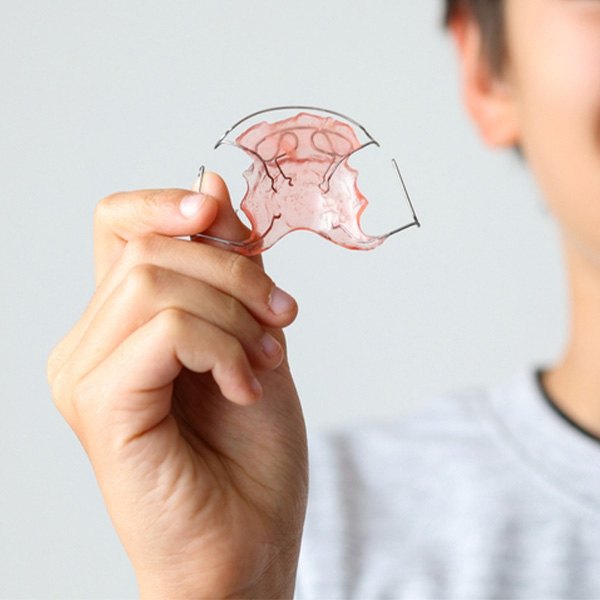
Activator / Bionator
The advantages include effective correction of the bite, promotion or inhibition of jaw growth, and stabilisation of previously treated jaw misalignments.
Treatment by M.Sc. med. dent. Tine Brüggemann
Ms Brüggemann treats children, adolescents and adults. She is also a member of the Swiss Dental Association (SSO) and the SSO Schaffhausen.
Career
Studied dentistry and state examination, Albert Ludwig University of Freiburg, Germany
Further training assistant in orthodontics, Dr Hermann Classens, Herbolzheim, Germany
Assistant dentist, Department of Paediatric Dentistry/Orthodontics, Cendenta Berlin, Germany
Master's degree in orthodontics, Danube University Krems, Austria
Since 2015 Orthodontist at Zahnärzte am Fronwagplatz, Dr Cornel Jud